

Case Study 01
From Guesswork to a Weekly Forecast: Ending Material Shortages at a Fast-Growing Startup
May 28 · Written by Christabel Barnaby
Company overview
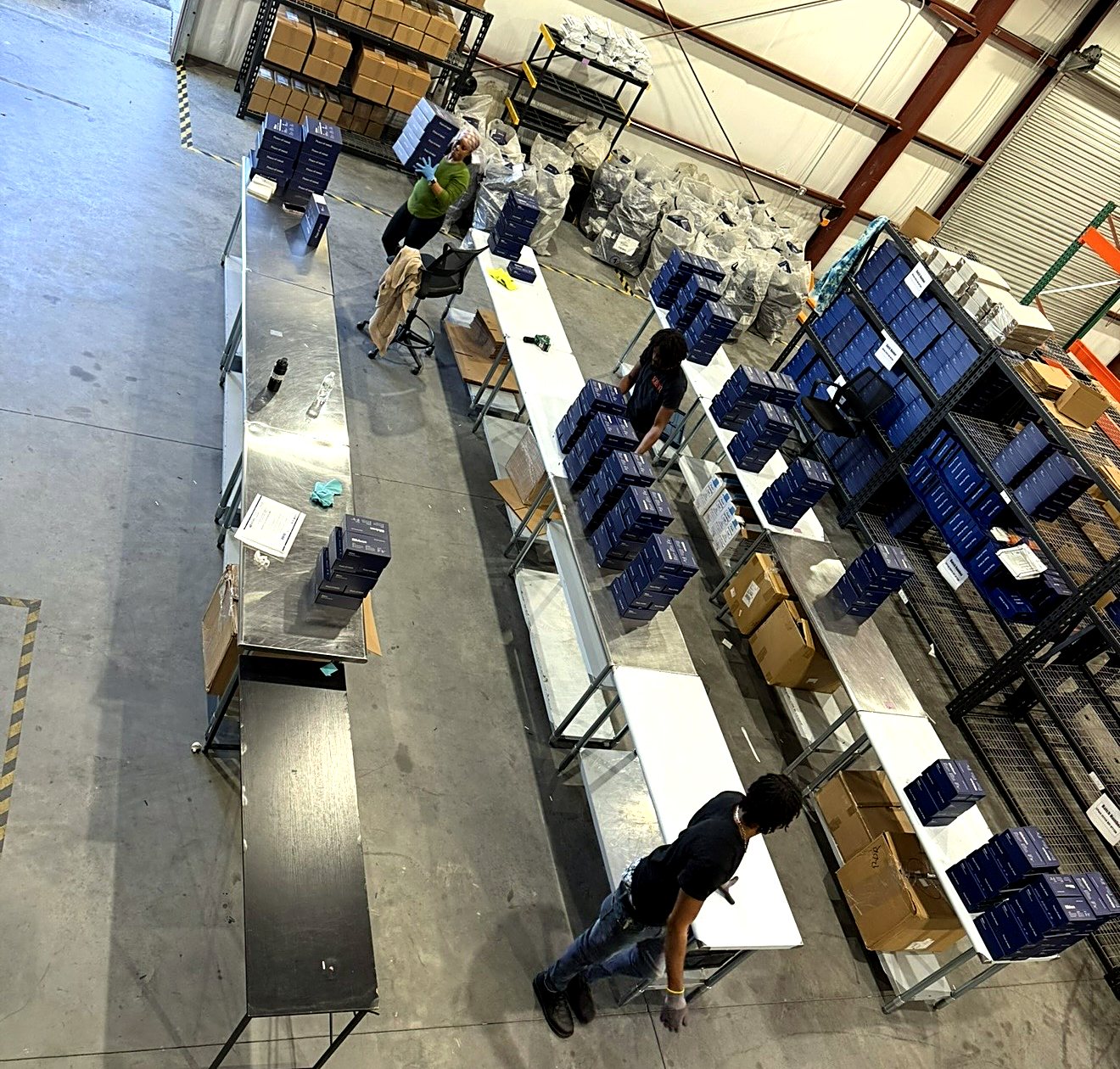
An early-stage diagnostics startup shipping at-home test kits across six SKUs. Kits were packed by hand, starting in the company’s garage at around 300 kits per week. Over about 1.5 years, volume grew to around 5,000 kits per week. (approximate figures)
The challenge
Raw materials ran short about once a month. The business had no demand forecast, so production and purchasing relied on guesswork, and as a startup it had no historical data to forecast from. Ordering sat with the owners, and requests were often forgotten or placed late, so materials arrived after they were needed. Supplier lead times ran about 1.5 to 2 weeks.
Key result
Material shortages stopped. (observed, not measured)
Our founder’s role
Our founder joined as the kit packer, with no control over ordering. She could tell the owners what was needed, but she couldn’t make sure it arrived in time. She built the systems that closed that gap, started taking over ordering about three weeks before being named Ops Manager (roughly three months in), and managed the U.S. suppliers. The owners handled overseas suppliers, and the two collaborated as needed.
Approach
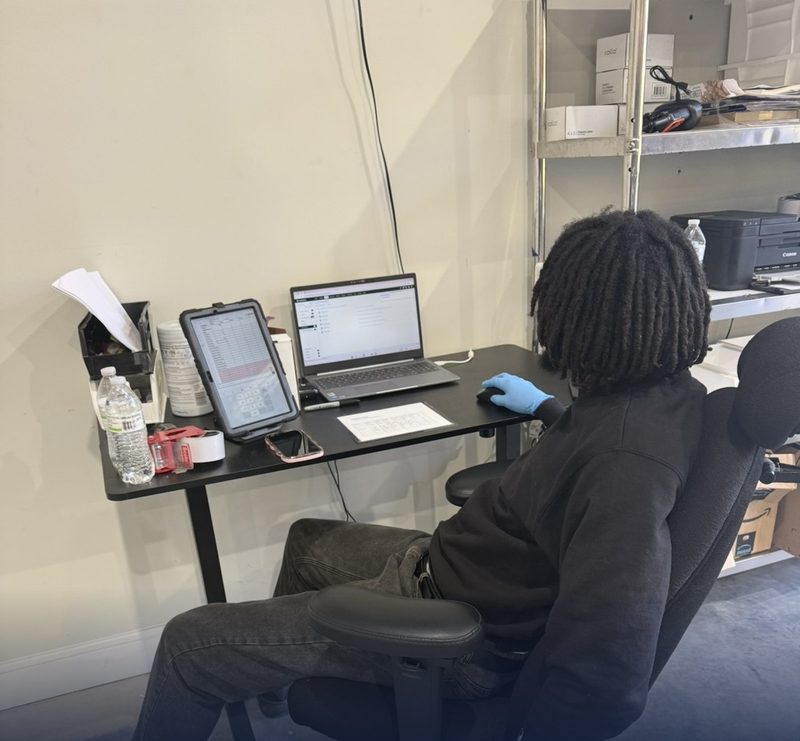
She didn’t wait for authority. Within her first month she built a simple forecast on paper, and as the owners saw the results and gave her more responsibility, she built it out in Excel.
Implementation
- Weekly demand tracking. Outgoing orders were tracked each week to show weekly demand and how quickly it was growing. With no historical data, this turned the numbers the business already had into a working forecast.
- A material calculator in Excel. Every SKU had its own materials list. A 12-pack kit, for example, uses 12 individually packaged strips, 12 cups, 12 scan cards, one pack of napkins (10 per pack), one thank-you card and one branded box. Entering the planned quantity of each SKU produced the total materials needed, for any number of weeks.
- Exact order quantities. The owners received exact quantities from the calculator instead of rough requests, until ordering moved to our founder.
- Supplier changes. As volume grew, lead times and order sizes became the next bottleneck. New and backup suppliers were found, and some existing suppliers were kept as backups.
- Production one week ahead. Using the forecast, the team produced a week ahead of demand: what was made this week served the next week’s orders. The lead stopped at one week because the product was still being modified, and a larger stockpile risked waste.
Results and impact
- Material shortages stopped. (observed, not measured)
- Before the changes, materials ran short about once a month. (approximate recollection)
- Supplier lead times dropped from about 1.5 to 2 weeks to about 3 days to 1.5 weeks, depending on the material, and cheaper suppliers were found as well. (approximate recollection; no cost figure)
- Finished-product stockouts improved significantly, and the operation stayed one week ahead of demand. (observed, not measured)
- Known lead times let the team plan ahead instead of reacting.
Key takeaway
A business doesn’t need years of data to forecast. A simple weekly tracker and a materials calculator were enough to end the shortages. Fixing one bottleneck exposed the next, which is why a growing operation needs planning that keeps pace.